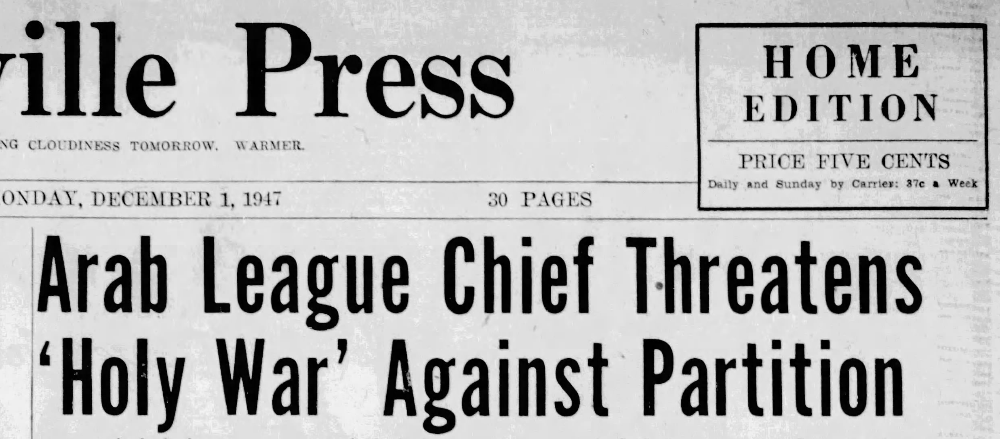
(This page doubles as Chronology C: Through 1914.) Many peoples around the world- Assyrians, Armenians, Catalans and Kurds, to name just a few- have attempted to gain or regain a homeland. The Jews were one of them and they had an excellent case.
Sections:
Returnees, Homeland, Indigenous and Genetics, Gentile support,
Zionism, Lies and fearmongering before WWI,
Condition of the land, Saviours, Purchases (no theft),
The Jews transformed their fields, Arabs who enjoyed Zionism,
Was colonization evil?,
Relations between Muslims and Jews, The Jewish perspective of Arabs.
Returnees
A small number of Jews remained in the Land of Israel after surviving the Roman wars, slaughters and exile. They were transformed from a prominent nation to lowly remnants scattered in the Middle East and then much of the world.
Even then, the Jews strengthened their presence in Judea (renamed Palestine by the Romans). The Jerusalem Talmud was compiled in the 3rd century and an autonomous Jewish Patriarchate withered in 425 CE.

City of God by St. Augustine – 426 CE. Book XVI (16), Ch. 21 (end), Archive.org.
Translated from De civitate Dei by Rev. Marcus Dods.
Christianity reigned at the time and, due to decrees, innocence and ignorance, many Jews converted or assimilated. Samaritans were another significant group in those days.
More:
Brandeis Center article about the Jewish connection to the land.
JPost article about Jewish life in the Middle East before Islam.
Throughout the centuries of exile, there were Jews who returned home. It was an arduous journey for most who attempted it and many perished along the way. Jews have maintained a continuous presence in the Holy Land since Biblical times.

The Palestine Problem Today; Israel and its Neighbors – 1953, p. 13. Archive.
Carl Hermann Voss, Chairman of the American Christian Palestine Committee.

Jews were the plurality of Jerusalem (and the majority by 1910).
(British) Parliamentary Papers, Band 67 – 1874, page 992. Google Books.

Jews in Tiberias and Safed had their own currency.
The Land of Israel: A Journey of Travels in Palestine – 1865 by H.B. Tristram.
Page 576, Archive.org.

There was a community of Polish Jews in Tiberias. Ibid., p. 426.

Spanish Jews in Jerusalem. Ibid., p. 176.


Ibid., p. 576. More on p. 512.

Russian Jews in Safed.
Stirring Times by James Finn – 1872. Page 130 on Archive.org.
Between 1839 and 1875, the philanthropist Sir Moses Montefiore compiled five censuses of the Jewish population in the Holy Land and each time they counted hundreds of organizations and synagogues. From just 7,000 souls in 1800, the Jewish population rose to 43,000 by 1890- before the Zionist movement.
The Jewish inhabitants of Eretz Israel came from all corners of the globe…
The Montefiore Endowment website.
Also:
Jewish Presence in the Land of Israel in the 19th Century: Insights from the Montefiore Censuses.
See Conclusions on Jews from India, Cuba, America, etc.
In the religious and traditional circles of Judaism, daily prayers, blessings after eating a meal, songs on the Shabbat and holidays, customs (as in breaking a glass at the end of a wedding ceremony), and so much more are based on reminders of Eretz Yisrael and a yearning for the home to be rebuilt. Modern Israel was the first stage.
The Arabs knew that the Jews hadn’t given up hope.
Homeland
Judaism is much more than a religion. Jews are a nation and Israel is their dwelling. That some Jews don’t care about this (sadly) does not change the fact.
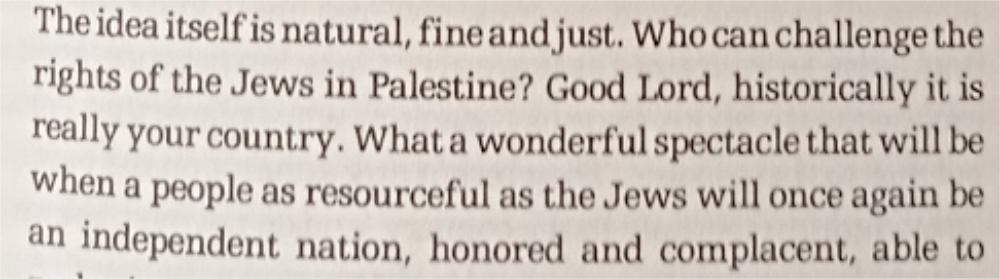
Yousef Ḍiya’ Bāshā al-Khalidī, Mayor of Jerusalem, in a letter to his friend Rabbi Zadoc Kahn, Chief Rabbi of France – 1899.
Jerusalem Quarterly #41 p. 7- 1987. Full page, cover, Google Books.
The mayor continued and asked that the Jews look elsewhere for a home, out of fear of upsetting the Turkish authorities…(click)
The Ottomans didn’t want any group to have independence.
Many anti-Israel outlets focus on the elsewhere part without mentioning the fear or the above quote. Others argue that al-Khalidi’s message applied even after the Turks lost the region, but that’s based on the false premise that Palestine belonged to the Arabs (previous two pages). Isn’t it shameful to say it’s the Jews’ home and that they need it…but they shouldn’t even get a part of it? (Page 8 of the Quarterly.)

Mecca’s Sharif Hussein in the Al Qibla newspaper – March 23, 1918. Full pages.
In Samuel Katz’s Battleground Fact and Fantasy In Palestine- 1973, p. 126-7. Archive.

The Observer (London) – November 11, 1917. Full page.
A dramatic example of what the land means to Jews came from Ethiopia in 1848. The community, Beta Israel, was separated from the outside world for at least 1,500 years and then a religious leader, Abba Zaga, wrote a letter to Jerusalem.
Peace be upon you Hebrew brothers. … They command us to separate ourselves from the Christians, to immigrate to your land, to Jerusalem, to join our brethren, and to offer sacrifices to God, the God of Israel, in the Holy Land.
The original letter is in a Russian archive. A handwritten copy was made.
More: JPost (the letter), Aish (history), GLP (genetics).
The Ethiopian Jews sounded like the Russian Jews in Safed:
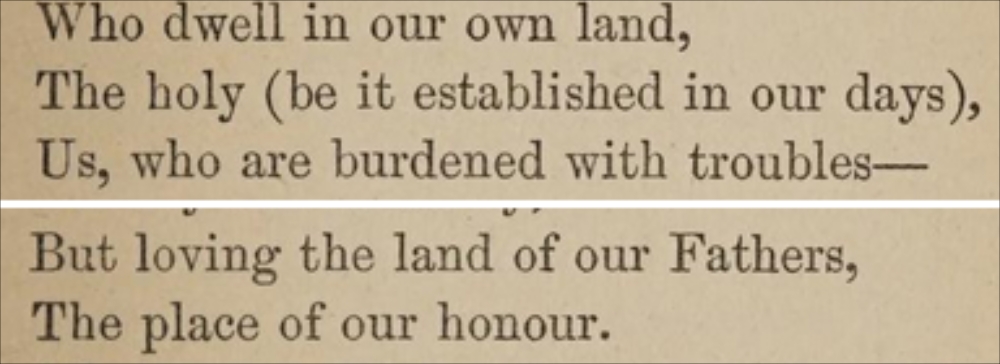
Finn, p. 130.
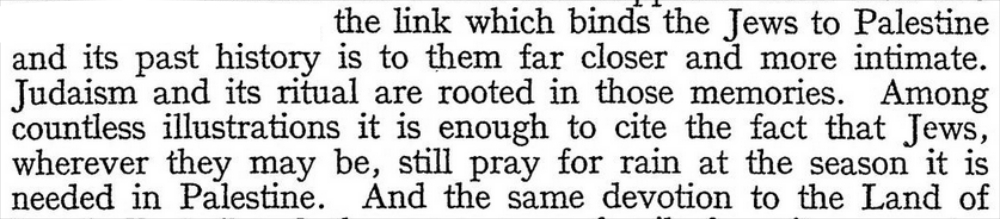

Britain’s Royal Commission Report (aka Peel) – 1937, pp. 11-12. Archive.org.
(Jews spoke of Eretz Yisrael, not Palestine.)
Indigenous and Genetics
Jews are an Indigenous People, which is why many others, including Native Americans, support Israel.
An official definition does not exist. The United Nations describes the term as “Indigenous Peoples are inheritors and practitioners of unique cultures and ways of relating to people and the environment. They have retained social, cultural, economic and political characteristics that are distinct from those of the dominant societies in which they live.“
That is 100% accurate for the Jews. Another aspect of indigenous is being the original inhabitants of a land and that applies neither to the Jews nor any Arab tribe. However, the Jews fully became a nation in the land and remained fused to it even in exile. Many Jewish laws are specific to Eretz Yisrael.
Genetic studies have supported history. (A few from the same section on the Arabs also concerns the Jews.) From the 2010 analysis titled Abraham’s Children in the Genome Era:
- “Here, genome-wide analysis of seven Jewish groups (Iranian, Iraqi, Syrian, Italian, Turkish, Greek, and Ashkenazi) and comparison with non-Jewish groups demonstrated distinctive Jewish population clusters, each with shared Middle Eastern ancestry…” From the Abstract.
- “In this study, Jewish populations from the major Jewish Diaspora groups—Ashkenazi, Sephardic, and Mizrahi—formed a distinctive population cluster by PCA analysis…” From the Discussion paragraph.
These also dispel the falsehood about Ashkenazi Jews descending from Turkish Khazar converts. Here’s another that refutes it and check the very end of Discussion on a third. Notice how the people who push this conspiracy theory avoid the truth that much of the Muslim population in Old Palestine came from Christians and Jews who converted to Islam.
Of all the ancient peoples who had dominion in the land, today only the Jews remain. More: Tablet Magazine and Times of Israel.
Every Jewish person is a descendant of someone who lived in the original Land of Israel (except for converts, naturally).
Gentile support
Until Zionism, Jews who kept the flame burning over the centuries hesitated to petition the world powers for backing of their dream, despite many people around the world who saw it as a matter of justice and despite Christians who believed in the Restoration. (Many Christians ultimately envisioned the conversion of Jews, but that didn’t affect the Jewish perspective.)
In the late 1600s and early 1700s, Denmark’s Holger Paulli, a wealthy slave merchant, found religion and “…proclaimed that it was his intention to establish a new Jewish kingdom in Palestine, and he addressed letters to several European rulers apprising them of this resolve and assuring them that Jerusalem would be rebuilt in 1720.” – Bible Portal.com.
Rightful heirs of Palestine!
France’s Napolean Bonaporte in a 1799 letter to the Jewish nation.

John Adams, former American President, in an 1819 letter to Mordecai M. Noah.
Rotunda, Founders Early Access, University of Virgina Press.
Similar from other Founding Fathers:
Article by Joseph Prud’homme.
After Egypt controlled Syria-Palestine from 1831-1840, world powers raised a variety of plans for Palestine. In 1840, the Russian government wrote a letter to Prussia deriding the recent talk of a Jewish rebirth.

“There have even been a few individuals who have expressed the wish for Jews, of ancient and guilty origin who are dispersed in different countries, to attempt social and religious renewal in the city of Solomon.”
Notes on The Diplomatic History of The Jewish Question – 1919, p. 107.
By Lucien Wolf on Archive.org.

A UK idea from 1840.
Peel, p. 14 (bottom).
In 1842, Britain’s Colonel Charles Henry Churchill, who served as a consul in Ottoman Syria, drafted a political plan for the reestablishment of a Jewish state. He based it partly on the shock of an 1840 blood libel against Jews in Damascus. (This chapter from a book in 1885 has the detailed horror story.)

The plan started with a letter to the philanthropist Sir Moses Montefiore.
Wolf, p. 119.
- In 1864, Charles Haddon Spurgeon, an influential English Particular Baptist preacher, spoke about Restoration of the Jews.

Shaftesbury again, in Palestine Exploration Fund – 1874, p. 115. Archive.
More: See the third and fourth paragraphs of this Fathom article.
The following are after 1914, but make the same point. The victorious WWI Allies spoke of a new era when small nations would have self-determination. The Jews were a small nation. The Arabs in Palestine were not (Page #2).
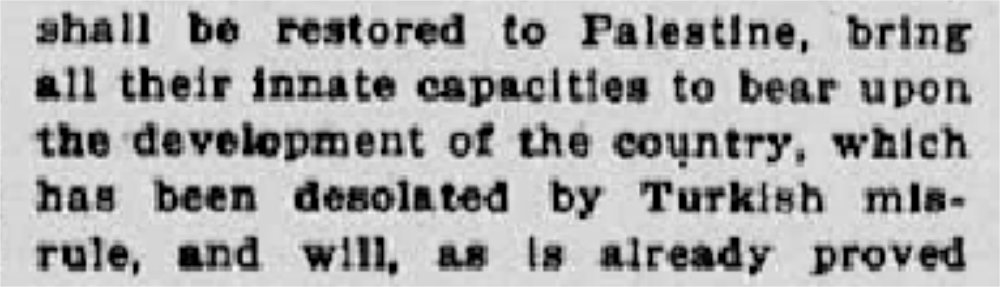
Washington Evening Star – August 17, 1919. Full page.
Archbishop of Mount Sinai, Poriphyrus II of the Greek Catholic Church, and head of the vast majority of Christians in Palestine.

Britain’s White Paper – 1922, page 19. Wikimedia.
The Jewish Home was by right, not sufferance.
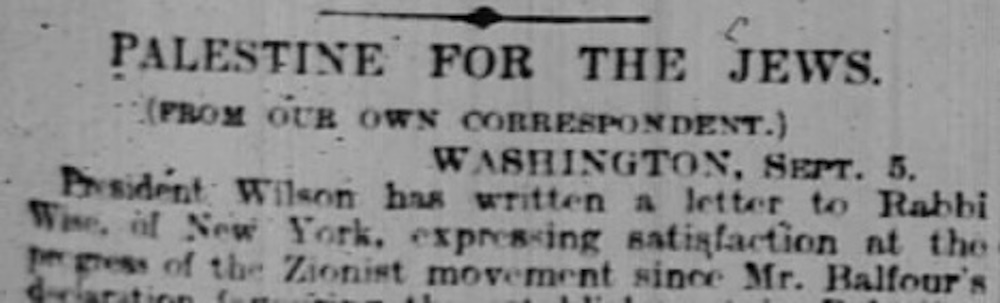
American President Woodrow Wilson.
The Times (London) – September 7, 1918. Full page.
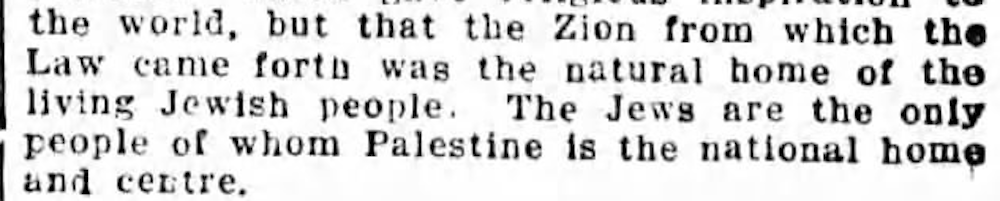
Town and Country Journal (Australia) – June 12, 1918. Full page.

The Times (London) – February 7, 1919. Full page.
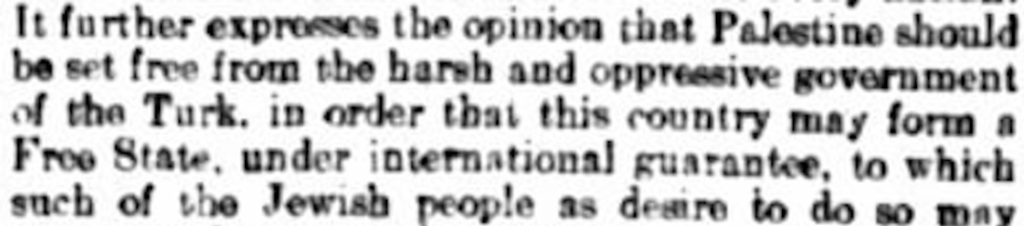
The British position for the formation of the League of Nations.
The Daily Telegraph – February 25, 1918. Full page.

The New Europe, quoted in Literary Digest – June 23, 1917. Full page.
Similar:
New York Times – September 7, 1918. Clip, full page.
British MP in The Daily Telegraph – Nov. 18, 1930. Clip, full page.
More:
Non-Jewish Zionism: Its Roots in Western History – 1983, Regina S. Sharif in Kuwait.
More than justice
Gratitude was also a prominent feeling.
In spite of Bolingbroke and Voltaire, I will insist that the Hebrews have done more to civilize man than any other nation. If I were an atheist, and believed in blind eternal fate, I should still believe that chance had ordered the Jews to be the most essential instrument for civilizing the nations.
America’s second President, John Adams.
The Jews started it all – and by “it” I mean so many of the things we care about, the underlying values that make all of us, Jew and gentile, believer and atheist, tick. Without the Jews, we would see the world through different eyes, hear with different ears, even feel with different feelings. And we would set a different course for our lives… Their worldview has become so much a part of us that at this point it might as well have been written into our cells as a genetic code.
Thomas Cahill, The Gifts of The Jews – 1999.
The following, and more, were introduced to the world by Judaism: The rule of law, all people being equal before the law, objective morality, a government with a separation of powers, charity, the equality of men and women (with their different strengths and responsibilities), a weekly day of rest, and, of course, a singular God who is the Creator and benevolent.
Two articles to better understand how Jews transformed humanity:
Aish and Rabbi Sacks.
In the world of antiquities and artifacts, a movement has been under way since around 2015 where museums and governments have voluntarily returned items that were acquired illegally, as during wartime. The Holy Land for the Jews was a similar sentiment.
Zionism
In general, Zionism is merely a word from the late 19th century to describe what Jews have been doing ever since they were exiled from their home.
1800s before the movement
In 1862, Moses Hess wrote about Jewish nationalism in Rome and Jerusalem and he became the forerunner of the activism.
In the first half of the 19th century, the Ottomans barred foreigners from purchasing land in the region of Southern Syria and Palestine. At other times afterwards, Jews were specifically barred.
In between, Moses Montefiore developed a village and assisted poor Jews.
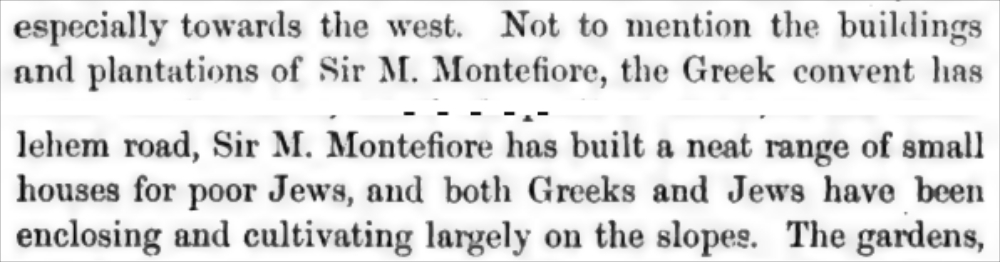
Years later, a wealthy Arab was compared to another Jewish philanthropist. (This is mentioned because the different mentality of most of the Arab upper class greatly affected the conflict after World War I.)

Turks, Arabs and Jewish Immigration Into Palestine: 1882-1914 – 1965.
Page 401 (455 of file), Oxford University Research Archive.
More on this source below.

The ruling Muslim Turks granted an area to a Jewish group in 1870.
The Manchester Guardian – September 2, 1913. Full page.
Similar:
Encyclopedia Americana 1922 , Vol. 16, page 101. Clip, full page, link.
The movement
Zionism as a movement arose in response to pogroms and wicked antisemitism in the Russian Empire and elsewhere in Eastern Europe, which was in the context of similar violence and discrimination in Europe and much of the world over the centuries.

New York Tribune – April 7, 1882. Full page.
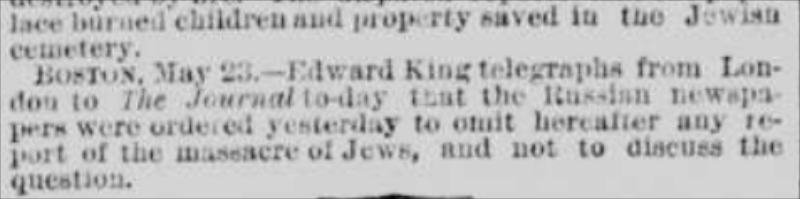
New York Tribune – May 24, 1882. Full page.
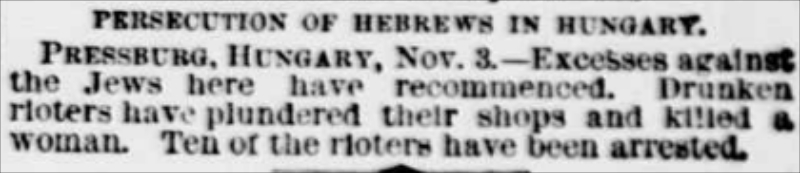
Washington Evening Star – November 3, 1882. Full page.
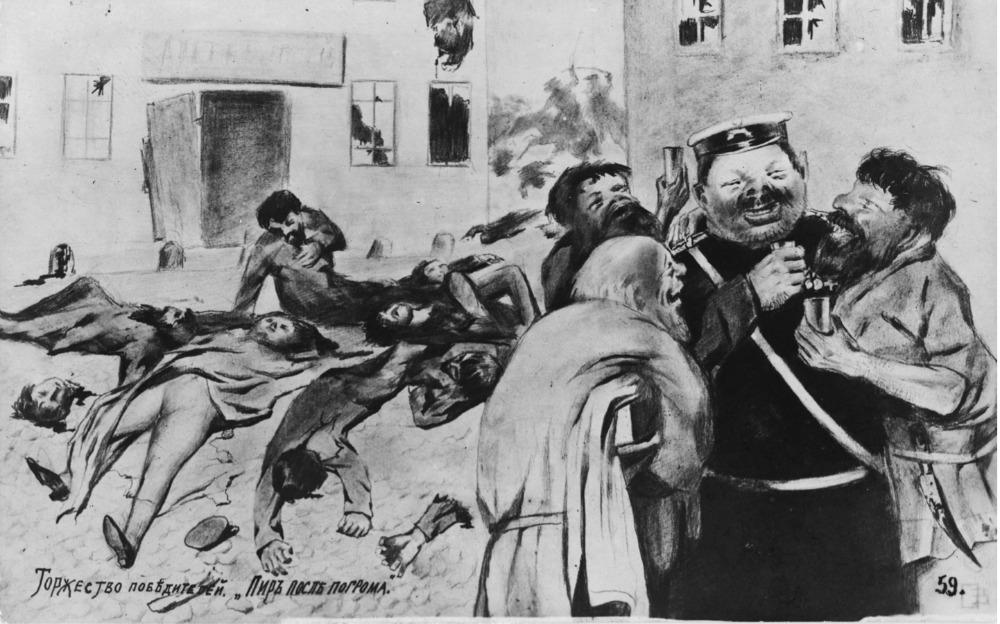
In parts of Russia, killing Jews was worthy of a postcard.
1906, unknown artist, Blavatnik Archive.
The international press in those days didn’t cover the full scope of it. Around 15,000 Jews were murdered by the end of the 1800s, hundreds of thousands were injured and thousands of homes and businesses were destroyed. 1881 and 1882 alone saw 200 attacks. And, no, the Jews were not guilty.
1931 article looking back at the first Russian Empire pogrom in 1881.
Jewish Virtual Library page about pogroms.
The 1906 pogrom in Bialystok- article by The Museum of Jewish Heritage.
Another catalyst was France in 1895. It had the Dreyfus Affair where the populace chanted “À mort les juifs“- Death to the Jews- even though one officer was (falsely) accused of treason.
In the centuries before then and around the world, there were hundreds of wide-scale acts of murder and persecution, and countless more against one or a few individuals. Governments (national or local), police, soldiers and clergy were often the instigators, complicit or silent. Dozens of times Jews were expelled from a city or country. (Chronology D delves into the lies and propaganda behind the abuse.)
There was one exception: India. Jewish communities have lived there for nearly two millennia without persecution or pressure to assimilate (Times of India article.) The difference is that Indians were not tainted by racist elements within the worlds of Islam or Christianity.

The Spanish Inquisition.
The Khmelnytsky pogroms that started in 1648 saw up to 50,000 murdered.
Two incomplete lists of persecutions and atrocities: Global and Arabia.
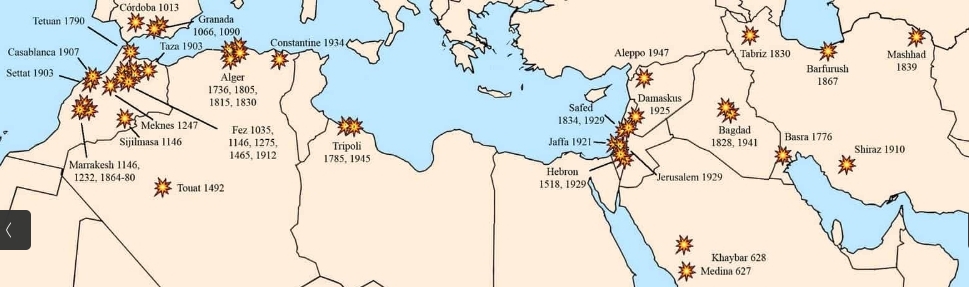
A map of massacres of Jews in the Middle East and North Africa.
Antisemitism spawned Zionism and then other people with the same hatred criticized the Jews for their obvious hope. Had there been no modern Israel, there still would have been abhorrence and harassment.
And it wasn’t just the Jews. Many other minorities in Europe faced severe issues (Eurac article) and this was the basis for the concept of small nations receiving self-determination after World War I (though the term was not defined). Even then, the Jews were different as many others had a homeland they could return to or would be treated fairly in new countries, like America. But nobody wanted many Jews.
There were different camps of Zionism. Political Zionism from 1897, led by Theodor Herzl, was the largest and it hoped for the revival of a state where Jews would be safe. Herzl felt that if Jews no longer lived as a foreign presence within host countries, then others would have no reason to resent them.
Those Jews from Russia had a socialist worldview and they also believed that countries like Australia and Canada, with vast empty lands, had no right to bar migrants in need; all the more so, they felt the Arab-Muslims after WWI with too much land in the Middle East had no right to bar desperate Jews. (Plus, they were never the rulers, Palestine had never been an independent entity, etc.) On top of that, while Canada and other governments have to spend money and resources on immigrants, the Jews asked for nothing and offered the Arabs the benefits of Zionist development.
Zionist intentions were honest and borne of despair. They simply wanted safety and freedom.
Hatred is ironic: Continued antisemitism over the decades has caused many Jews to move to the Promised Land- and the more Jews in Israel, the more land they need.
Immigration, lies and fearmongering prior to WWI
While most of the early Zionists were secular and a few anti-religious, the desire was based on their heritage. In the beginning, hope was all they could do and, while some Arab concern over rising Jewish immigration was understandable, the Jews didn’t even get a fair chance.


Rossler = German Vice-Consul, Bey = Turkish official.
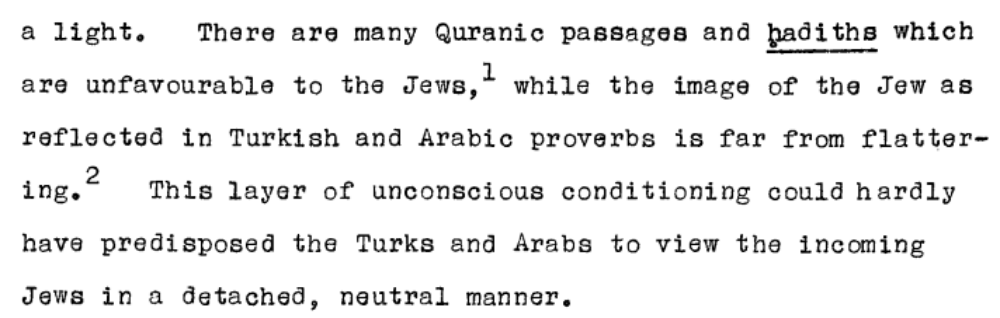
Turks, Arabs and Jewish Immigration… Oxford Archive.
Top– p. 6, middle- p. 127 (179 of file) and bottom- p. xxx (42).
Click for more about this source.
This research paper from 1965 by Neville Mandel was rare for examining attitudes towards Jews in the late 1800s and early 1900s. He employed a variety of sources, including hard-to-find Arab newspapers. We hope to replace as many as possible with the originals, though there is nothing suspect about the work and his perspective is neutral.
Concern was magnified by propaganda and irrational fear.

Ibid., p. 57 (104 of file).
Jews were about 1/10th of the population at this time.

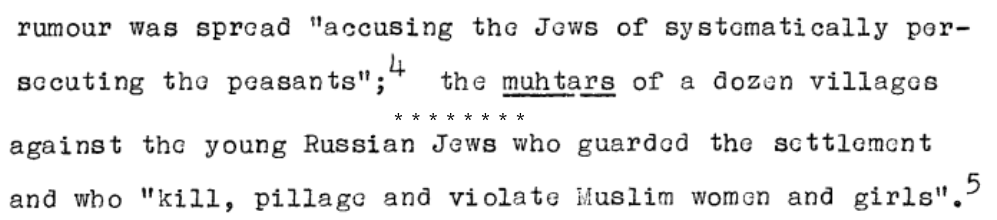
Concerning 1913. Ibid., p. 392 (446). and p. 391 (445).
These are the real roots of the conflict. At this point in time, the damage was mostly limited to the upper class of Arabs. Chronology D has more cases of it and worse consequences.
Level-headed Turks and Arabs saw things differently.
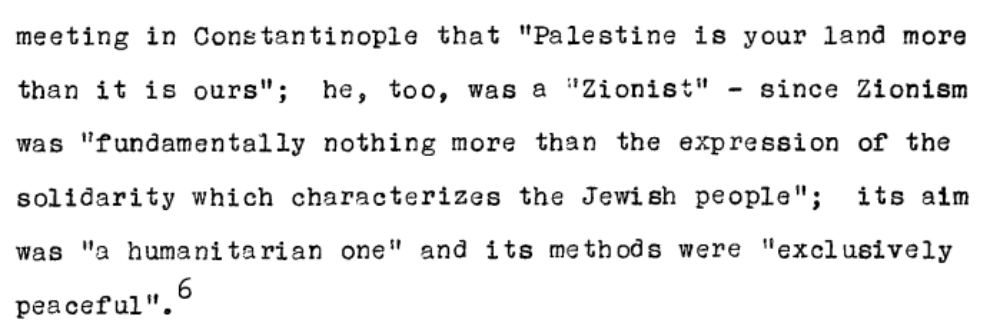
Ibid., p. 191 (243).
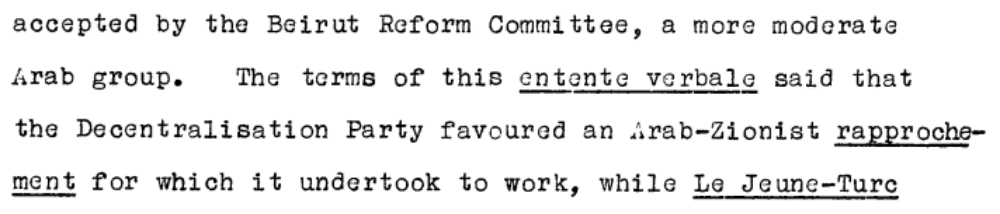
Ibid., p. 10.
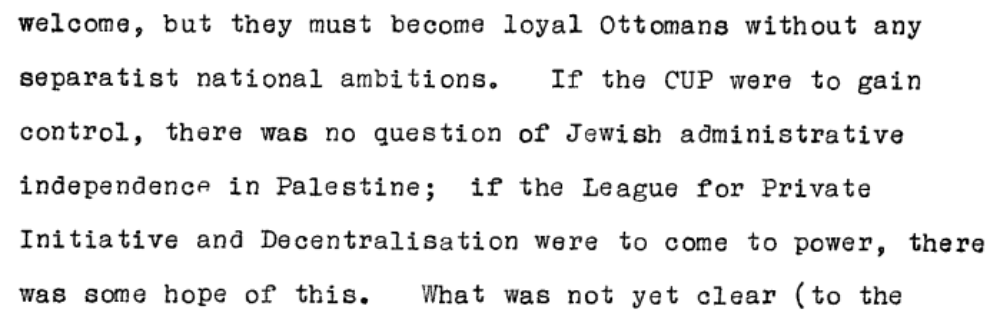
Ibid., p. 154 (206).
Even when the Turks were favourable to the Jews (they hoped for financial assistance in return), they made things difficult.
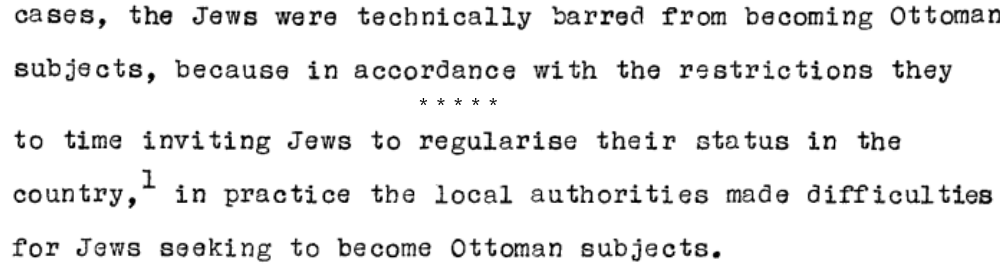
Ibid., p. 385 (439).
Much of the early opposition to Jewish immigration came from Arab Christians. (Clip from Mayor al-Khalidi, and pp. 7 (8), xxxi (43), 29-30 (75-76), 41 (87), and more from the above source.. However, since 1948 Christians in Israel know they’re much better off there than anywhere else in the Middle East, which proves the peaceful Jewish character.
The early Zionists saw no difference between this distorted feeling and historical antisemitism, and it reinforced the belief that being a minority in any society was the danger. Of course, they weren’t in charge of their fate.
More Arabs viewed Zionism favourably after World War I and that’s covered on Chronology D, along with other detractors.
Condition of the land
Some pro-Israel outlets go too far in portraying Palestine of old as completely desolate and pro-Palestinian voices go too far in saying the Jews received an established country.
This is the world’s most battle-weary land.

The Immovable East – Studies of the People and Customs of Palestine – 1913
by Philip J Baldensperger. Page xvii, Archive.org.
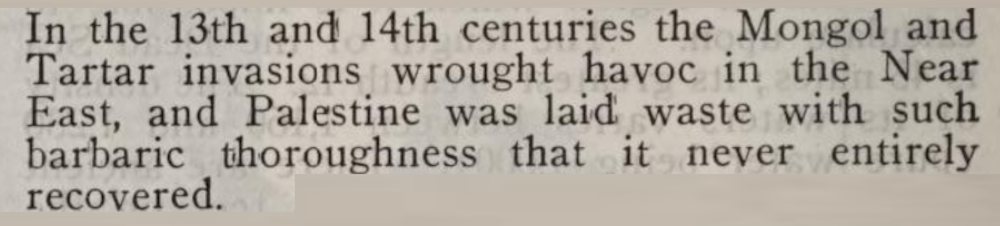
Encyclopedia Americana 1922 Vol. 21, p. 200 (226 of file) – loc.gov.
There were diseases, notably malaria, that ravaged the territory.

Peel, p. 310.
(“Country” often refers to a geographical area, not a state.)

A Survey of Palestine Volume II- 1945-46, page 162. Archive.org (login).
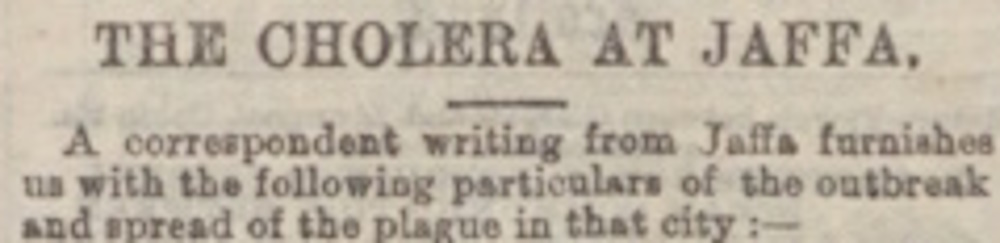
Liverpool Mercury (UK) – September 19, 1865. Full page.
In the 1800s, there was organized life in about a dozen towns, like Jerusalem, Hebron, Acre/Akko, etc. The Christians were generally better off than the Muslims.

Charles Warren’s Survey of Western Palestine – 1884, p.465. Archive.org.

The status before World War I. Peel, p. 208.

Tristram, p. 137. (“Shechem” is the Hebrew name.)
Similar: Glass-making in Hebron (Biblical Researches in Palestine).
Going back to the 1700s, Acre became a major cotton hub between Europe and Syria. It then withered and reverted to a fishing village in the mid-1800s.

Thomas Philipp‘s The Rise and Fall of Acre – 1990, page 1. Persée or pdf.
Philipp's work is also an example of historical revisionism that swept Western academia beginning in the 1990s. A lengthier version was published in 2002 and given a new title of "Acre: The Rise and Fall of a Palestinian City".
Egypt’s control from 1831-1840 brought improvements, but they didn’t last. Outside the main areas and Palestine was indeed a mostly-desolate wasteland, which included primitive villages.


The Innocents Abroad – 1869. P. 358, full; p. 289, full. Archive.org.
American writer Mark Twain wrote about his travels to the area.
(He said everyone in the Old City of Jerusalem was poor and sickly.)

Great Britain and Palestine 1915-1945: Info Papers No. 20, p. 30. Archive.

Peel, p. 310.
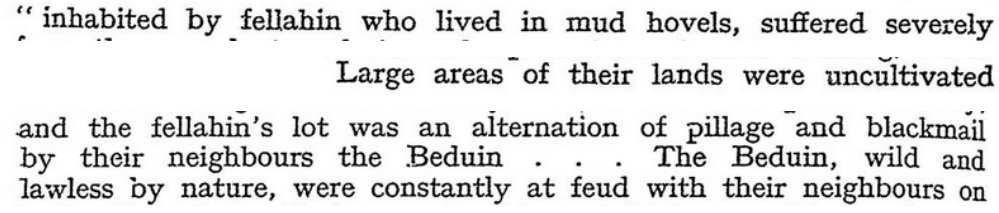
Post-WWI report on Beisan by Lewis French, Director of Pal. Development for the UK.
Peel, pp. 259-260.
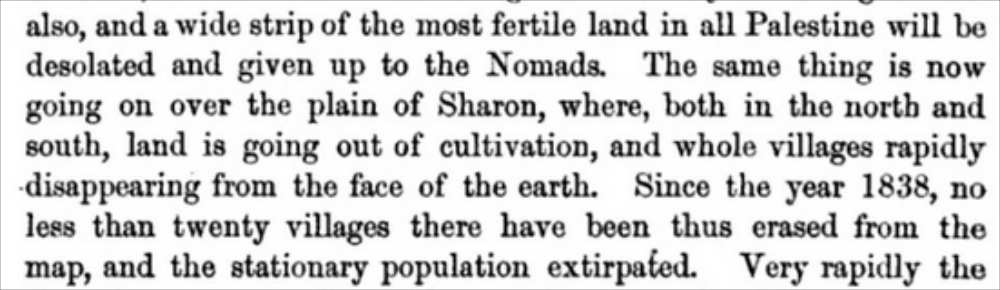
Tristram, p. 490.

Warren, p. 465.
Similar: New York Times – June 9, 1918. (Use Reader View.)
More: Peel, p. 6.
One of the classic cases of propaganda involves David Ben-Gurion's book Rebirth and Destiny of Israel written in 1954. The critics quote a fragment about 1917: "...we were conquering, conquering a land. We were a company of conquistadores..." What they omit is that he was referring literally to the soil that was unproductive, swampy and malaria-filled. Page 9, Archive.org.
More on infamous Ben-Gurion quotes:
Paper on Begin-Sadat Center for Strategic Studies
HonestReporting.com
Gregg Rosenberg, PhD.
Many saw the Jews as Palestine’s saviours.
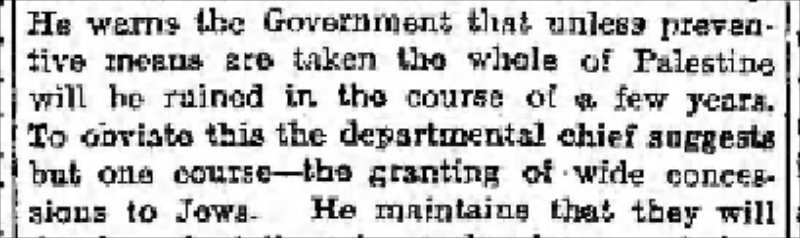
The Guardian (UK) – September 19, 1911. Full page.
The British head of the Agricultural Ministry after visiting Palestine.

Tristram, p. 490.
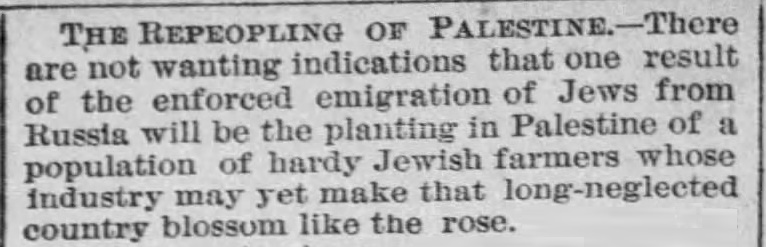
Baltimore Sun (USA) – June 19, 1891. Full page.
As above, this was the basis for many Arabs in supporting the Jews. Chronology D.
Thus, understand what it was like for the desperate Zionists to see the potential in Southern Syria and Palestine. Their homeland had never been an independent entity to the Muslims living in it; its small number of Arabs were an array of tribes and clans, and most of them were peasants and at least semi-nomadic; the Arab nation had vast amounts of land in the Middle East; Palestine was a largely desolate, malaria-filled territory controlled by the Turks; many people around the world supported the Jews; and there was safe transportation to make the dream possible.
The Jews didn’t steal land
They purchased a lot- from Arabs.
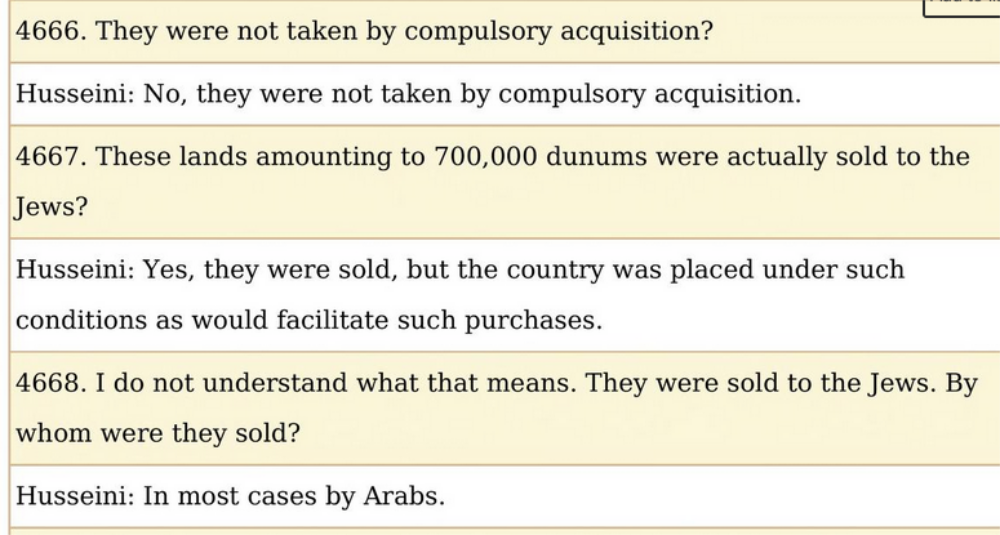
The Mufti Haj Amin al-Husseini’s interview with Sir Laurie Hammond for the Royal Commission in 1937. This copy from a CIA file in 1943, Archive.org.
The Mufti- the extremist responsible for nearly all the violence in those days and who accused the Jews of theft- acknowledged the lie.
(Not all interviews and testimonies were included in the published report.)



King Abdallah of Jordan: My memoirs completed – 1954, p. 98. Full page, Archive.
A smaller percentage of land was purchased from churches and foreign entities. The smallest amount, under 10%, was bought from fellahin.
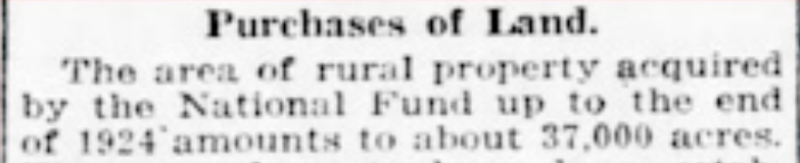
Washington Evening Star – 1925, page 36. Full page.
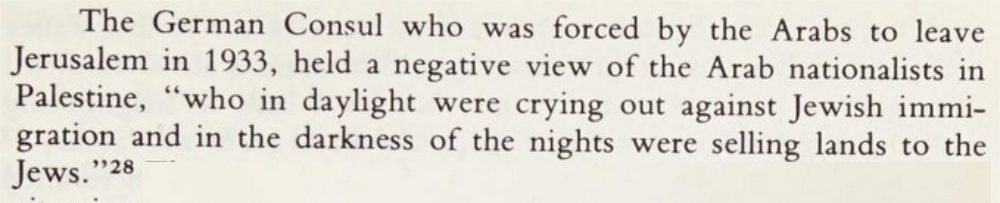
The Land Problem As a Factor article by Y. Porath , part of The Palestinians and the Middle East Conflict: An International Conference – 1976.
P. 515. Archive.org.
(See further down for more about Porath who elaborates what many say.)
Local Arabs sold so much land that the British didn’t take complaints seriously.

Ibid., p. 514. Full page.
In the early 1900s, Jews bought land in Tiberias and the Arab seller moved many of the Algerian settlers to Syria where he owned other property.
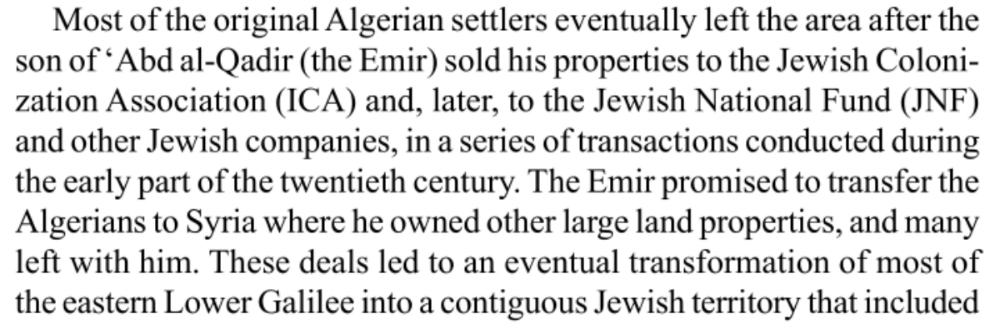
Rural Arab Demography and Early Jewish Settlement in Palestine – 2011.
By David Grossman, then a Professor of Geography at Bar-Ilan University.
Page 66, full page. The book.

Peel, p. 242.
Most of the land purchased was uninhabited and undeveloped.

Peel, p. 238.
In 1937, the holdings of each side were in proportion to their populations.
From the Sursock website, the Christian Arab dynastic family that sold much land to Zionists:
Jews purchased 200,000 dunams (more than 49,000 acres) from the wealthy family of Christian Arabs from Beirut (the Sursock family). Included in the purchase were 22 villages. …and bought from Ottoman landlords much of the land which now makes up present-day Israel.
18,000 acres of the Golan Heights were purchased in 1894. Five years later, the Turks seized it and expelled the Jewish residents.
Aish, CAMERA, Honest Reporting.
Also, a search reveals how mainstream outlets avoid the topic.
Unfortunately, the Sursock website perpetuates the exaggeration about Arab tenants becoming landless due to new Jewish owners.

Peel, p. 241.
- Through 1935, the British received 3,217 applications from Arabs having trouble finding new land or domiciles- out of a population that was close to 1 million.

Ibid., p. 240.
The British helped them find or build new homes. (Pages 57-58 in Report by His Majesty’s Government…Palestine and Trans-Jordan 1934 on Archive.org and the same from 1936 pp. 186-7 are two of many examples.)
- The Arabs’ own problems were projected onto the Jews, which has been a consistent feature of the conflict. Before and during Zionism, Arab peasants were displaced by Turkish abuse and neglect, indebtedness to the effendi, a poor work ethic and violence.
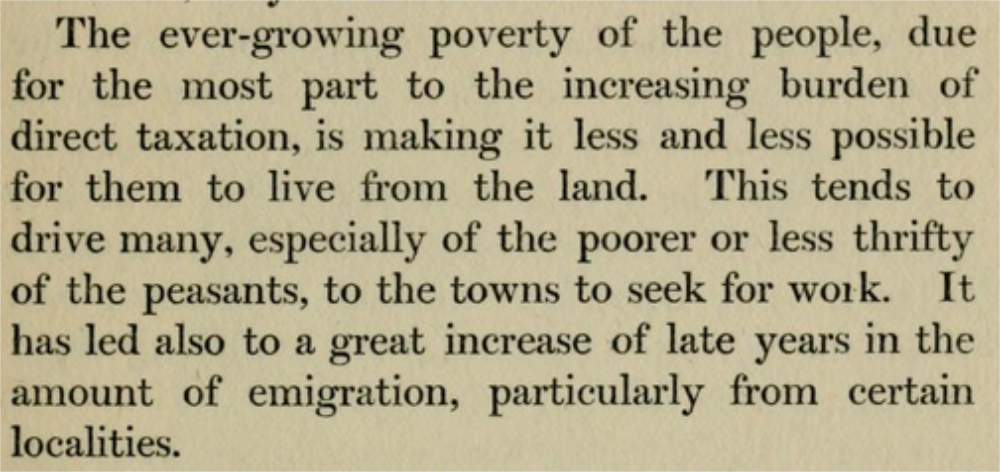
Peasant Life in The Holy Land by Rev. C.T. Wilson – 1906, p. 5. Archive..

Great Britain and Palestine 1915-1945 Information Papers No. 20, p. 30.

Syria and Pal. – Great Britain Foreign Office Historical Section – 1920, p. 57. Archive.
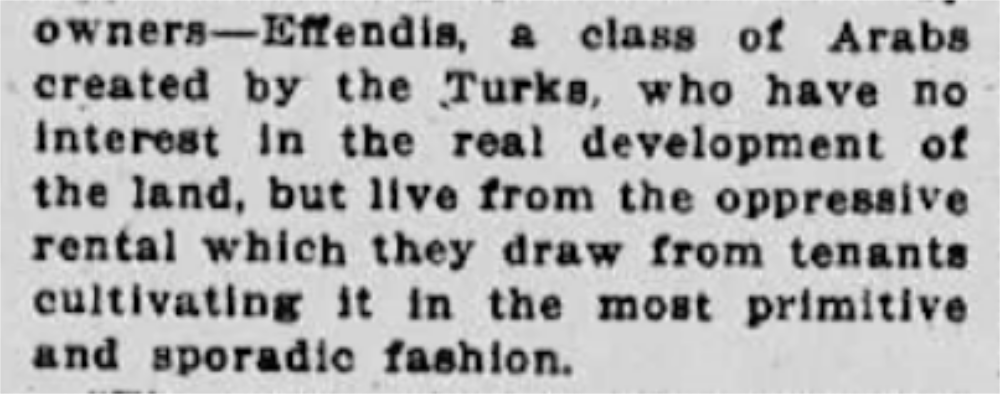
Washington Evening Star – August 17, 1919. Full page.
Similar: Politics in Palestine 1939-48 by Issa Khalaf, top of p. 13 (excerpt).

Report by His Majesty’s Government…Palestine – 1930, p. 15. Archive.org.

Porath, p. 513. Full page, Archive.

Peel, p. 241.
The Report accepted this point made by the Jewish Dr. Ruppin, who also discussed efforts to assist the Arabs.
Similar: Khalaf, pp. 15-16.
Orange farming experienced a boom and then variables in the citrus market caused hardship for many Arabs (Porath, p. 513).
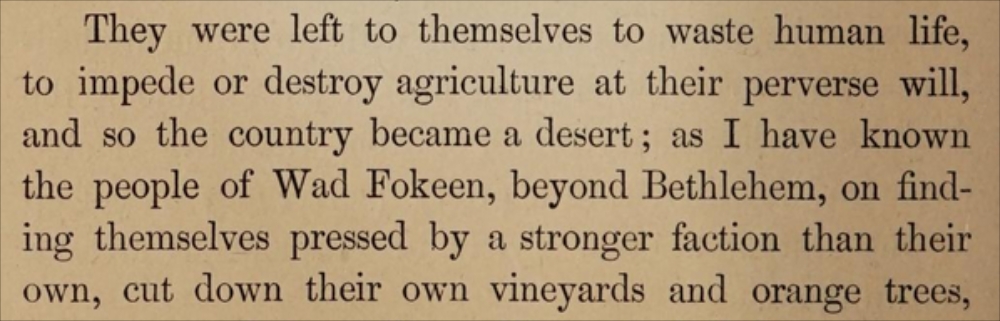
Finn, p. 244.

Trsitram., p. 107.
A major factor in the barrenness of the land, including the wider Fertile Crescent, goes back to the 17th century when Bedouin raids pushed the fellahin out of certain areas.

Diplomat Sir Alec Kirkbride in his A Crackle of Thorns – 1956, p. 20. Archive.org.
Concerning the early 1920s in Kerak that was similar to most other areas.

Re: Inhabitants who moved within Palestine until the early 1900s.
Grossman, p. 44, full page.
Similarly-

Peel., p. 242.
- Another aspect of displacement- really, the semi-nomadic life- was due to agriculture being seasonal work and dependent on the weather. (The first two pages cover enough: Palestine’s Rural Economy, 1917 – 1939 by Kenneth W. Stein on Emory.edu.)
- Finally, the natural way of life around the world sees some tenants vacate a property when it is sold. Neighbourhoods, towns, cities and countries have changed demographics throughout history. On top of high sale prices, the Jews went even further and usually paid extra to assist tenants who had to move.

Report by His Majesty’s Government…1934, p. 57. Archive.org.
Also Porath, pp. 517-8.
After purchasing empty or undeveloped lots from absentee owners, the Jews after 1928 found local sellers and this is when opposition grew. When complaints failed to prevent Arabs from selling land, leaders used pressure tactics and other means that proved successful, but created the misconception of mass eviction.

Porath, p. 521. Full page, Archive.
The tactics bled into the Arab Revolt that began in 1936. Not only did the Muslim hotheads contribute to the economic frustrations behind the Revolt (it was also about British rule and Zionism), they terrorized their own people which induced more Arabs to sell land.

Porath, p. 514.
Similarly, the breakout of the Revolt halted for three years British plans to restrict land sales to Jews (Porath, p. 535). This has been a constant: Violence from the Muslim radicals makes things worse for their people.
Click for more about Y. Porath and the source.
Yehoshua Porath was a moderate-liberal Israeli historian and professor. His article is titled The Land Problem As a Factor and the full title of the 1976 book it’s in is The Palestinians and The Middle East Conflict: An International Conference Held at the Institute of Middle Eastern Studies, University of Haifa.
While other references are employed to support a few of his points, we hope to get his original sources (from pages 537-540) that are mostly in the British Archives and Arabic newspapers. His professionalism is measurable by the absence of complaints against his article. Parts have appeared in many other publications, and many other authors and scholars quote the same sources.
For later works on Arabs who sold land to Jews, with British and Arabic sources:
Center for Israel Education (page 3 of PDF).
Alex Grobman on ResearchGate.
Palestine Betrayed by Professor Efraim Karsh.
Another myth about the purchases is that the Jews bought 6% of Palestine and, therefore, the remaining 94% belonged to the Arabs. No. Most people say the Jews bought 28%; regardless, a large majority of land, such as arid plots between villages and the Negev desert to the south, was either not privately owned or de-facto owned by the Ottomans. With World War I, the British became the new rulers and they inherited such property. (Lest anyone say otherwise, such land does not magically transfer to the populace.)

Britain’s Mandate for Palestine, endorsed by the League of Nations, encouraged Jewish settlement on state and waste lands.
Article VI (page 3)- 1922. PDF.
More from a 1972 study by Moshe Aumann:
For a short version, see this Abstract.
For details and sources, read the study.
Before 1948, the Zionists grew their land holdings strictly through purchases. See Page #4 for the 1948 War against the Two-State Solution when Israel seized property and her borders crossed the Partition Plan lines, and see Page #6 for her justified capture of territories in 1967.
Refutation: The 1930 Hope Simpson Report had misleading aspects that contributed to the exaggerations of landless Arabs and the lack of land. The 1937 Peel Report corrected the points, as with the above clips, so anyone who quotes Hope Simpson over Peel is displaying ignorance or bias.
The Zionists transformed their fields
Hard work, capital investments and modern techniques turned empty, swampy lands into an oasis.

Events from 1913. Peel., p. 47. Full page.

Peel., p. 41. Full page,
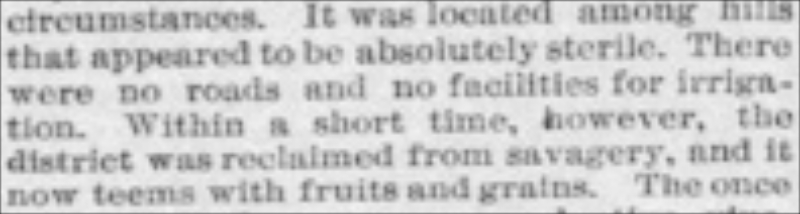
Baltimore Sun (USA) – June 19, 1891. Full page.

The Palestine Problem Today; Israel and its Neighbors – 1953, p. 14, Archive.
Carl Hermann Voss, Chairman of the American Christian Palestine Committee.
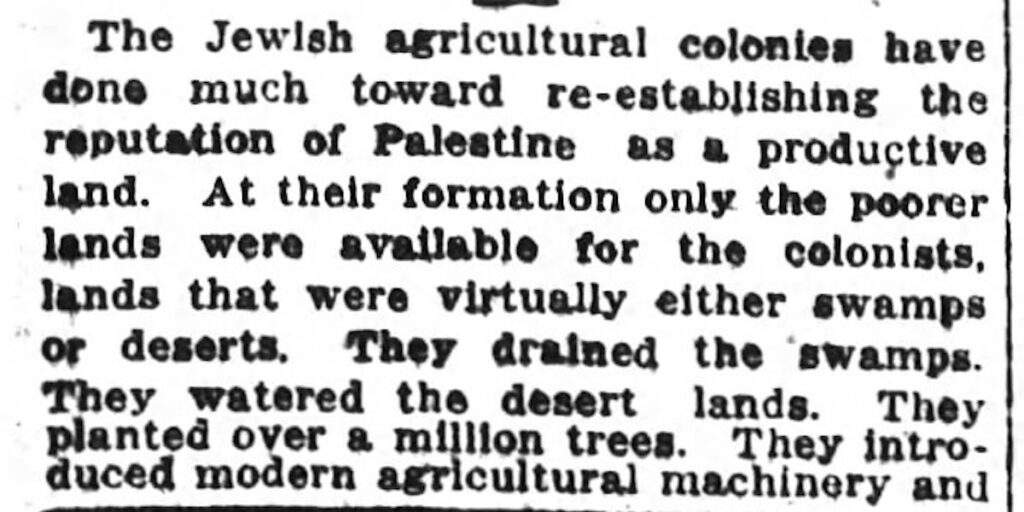
Houston Post – January 27, 1918. Full page.
Similar:
The Times (London) – March 30, 1918. Page.
New York Times – June 9, 1918. Page.
More:
An article about property rights and displaced Jews.
Rebuttal: The people who later favoured Partition and the Two-State Solution based it partially on these facts. How could the Muslims- who were not even the rulers- deserve sovereignty over areas that were long uninhabited and that the Jews purchased and developed?
Arabs who enjoyed Zionism

Turks, Arabs and Jewish Immigration… P. 40 (86), Oxford Archive.
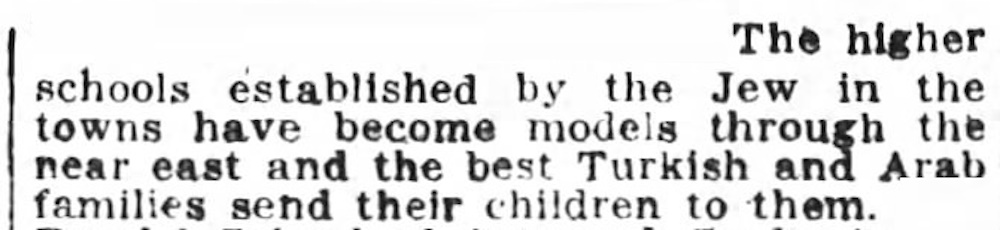
Houston Post – January 27, 1918. Full page.

The Times (London) – May 14, 1920. Full page.

Peel, p. 241.
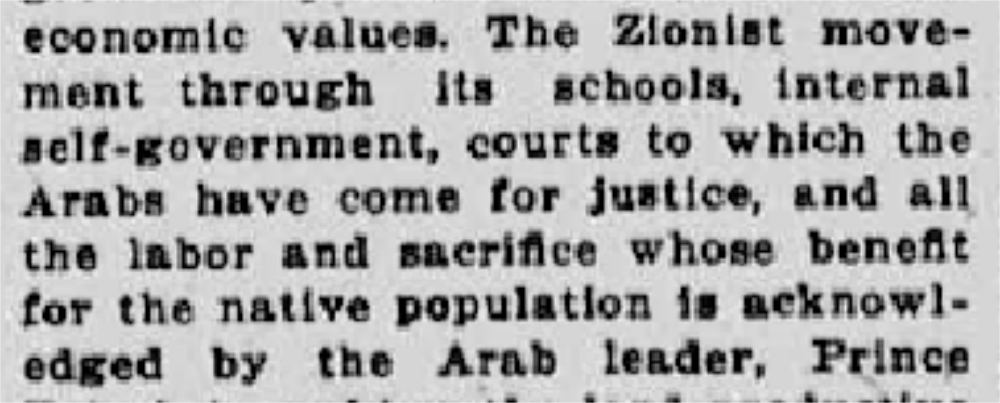
Washington Evening Star – August 17, 1919. Full page.

Nowhere To Lay Their Heads, p. 28. Full page, Canada’s Memorial University.
A 1945 essay by Victor Gollancz, a British socialist.
While we’re at it-

Tristram, p. 585.
Was colonization evil?
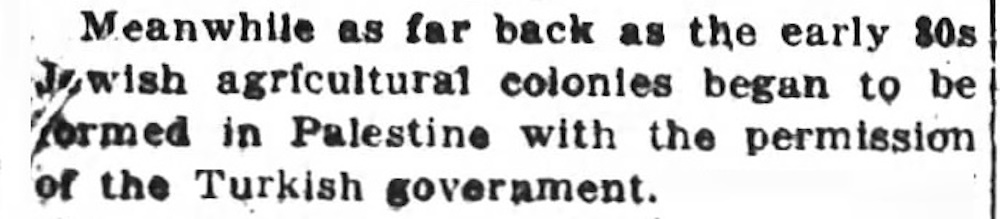
Houston Post (USA) – January 27, 1918. Full page.
The Jewish colonies in the 1880s had permission from the Muslim Turks.
Newspapers in those days, the Jews and even many Arabs used the terms “colonists”, “colonies” and “settlers” in a normal sense.
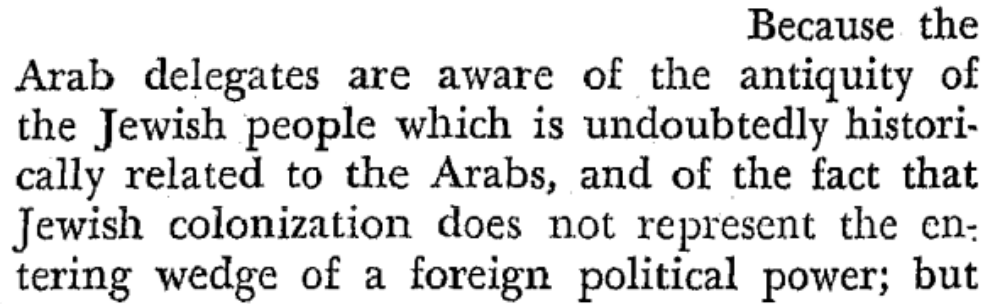
Minutes from a 1922 meeting between Jewish and moderate Arab leaders, quoted in
UN Special Committee on Palestine – 1947, A_364 Add-2, p. 196. UN.org.

Palestine Land of Promise by Walter Clay Lowdermilk – 1944, p. 179. Archive.
He was an American soil conservationist.
Only later did words become negative as part of the radicals’ war against Zionism- and the propaganda campaign began mostly with the Soviet Union. (Harbinger’s Daily and Honest Reporting.)
Israel’s renewal does not compare to the colonial pasts of the United States, Canada, Australia, the Arabian-Muslim Empires and others. The Jews…
- Returned home
- Sought safety, not conquest
- Did not arrive with an army
- Bought land
- Did not alter the practices of the existing population
- Were supported by the world powers
- Those same nations guaranteed the rights of the existing residents
The tragedy and irony of the conflict is that violence by the Arab/Muslim extremists created the things they feared.
Chronology D covers the concept of dar-Islam that was, and still is, behind much of the violent opposition to Zionism/Israel. On the simpler level…
Ze’ev Jabotinsky was one of the founders of the Jewish battalions that conquered Palestine with the UK in World War I. He was a key figure amongst the small minority of Zionists who had different views than the mainstream. In his Iron Wall philosophy of 1923, he recounted a Zionist who, a few years earlier, explained how the Arabs misunderstood Jewish intentions. In response, an Arab newspaper, El Carmel, agreed that Palestine had room for many Jews who would not displace a single Arab. However…
“There is only one thing the Zionists want, and it is that one thing that the Arabs do not want, for that is the way by which the Jews would gradually become the majority, and then a Jewish Government would follow automatically, and the future of the Arab minority would depend on the goodwill of the Jews; and a minority status is not a good thing, as the Jews themselves are never tired of pointing out.“
Jabotinsky understood this perspective: “The native populations, civilised or uncivilised, have always stubbornly resisted the colonists, irrespective of whether they were civilised or savage.”
The problem with that was:
So that if there is any landless people in the world, even its dream of a national home must be an immoral dream. Those who are landless must remain landless to all eternity. The whole earth has been allocated. Morality has said so.
From the Iron Wall on Jewish Virtual Library.
The Arabs had tons of land where they were the majority and the Jews had none. The conflict has always been about more than just those from Palestine.
The Jewish need to return home was based on dreadful experience. This Arab perspective was based on fear. Early on, the Jews demonstrated that they were not violent and did not alter the practices of the Arab and Gentile populace. Since 1948, Israel has proven that its Arab citizens have a better life than pretty much all others in the Middle East and North Africa. Muslim and Christian Israelis have more rights than their coreligionists in France and Canada. (There are issues, but the fact that elements of the population have always sought to harm Israel is a much better explanation than why minorities in every other democracy face troubles. Foundation for Defense of Democracies article, Dr. Rohit K. Gupta post, CNEWA page.)
Minorities in non-democracies naturally fare much worse. Those who really want justice in the world should be championing the Kurds, Berbers, Assyrians and many other historical peoples to gain or regain independence. There's plenty of room and the legitimate concerns of the countries encompassing those lands are not difficult to assuage.
Jabotinsky understood some Arabs would not be swayed by the material benefits of Zionism and would fight for what they felt was theirs. He said a figurative wall- an impenetrable defense by the British or other world power- would make the Arabs realize that the Jews weren’t going anywhere. At that point, the masses would turn their backs on the extremists and accept citizenship in a Jewish-majority state.
The Zionist mainstream first sought agreement with the moderates.
Relations between Muslims and Jews
The point of mentioning the topic here is to add another reason as to why the Zionist leaders hoped for freedom as opposed to, say, a province within Syria. They didn’t want to leave their security to any other group. While for years some aspired to being a British Protectorate, it was harder to imagine a happy ending as a minority under Muslim rule.
In general
It’s true that in the old days Jews in Muslim domains had a better life compared to those in Christian Europe, however, that’s a low bar for a comparison. In general, both had positive periods and both had discrimination and atrocities. In the Middle East and North Africa (MENA) after the rise of Islam, Jews and Christians were respected as “People of the Book”, though considered lower in class to Muslims. They were forced to pay a special tax (jizyah) for protection and as a constant reminder of being dhimmis, though there were some exceptions, as for the poor or ill. People of other faiths or no faith were even lower and called infidels.
Whenever a Jew or Christian contravened a law or disrespected Islam or the Muslim chieftan- even unintentionally, slightly or merely suspected of it- there were harsh consequences that often enveloped more than just the perpetrator.
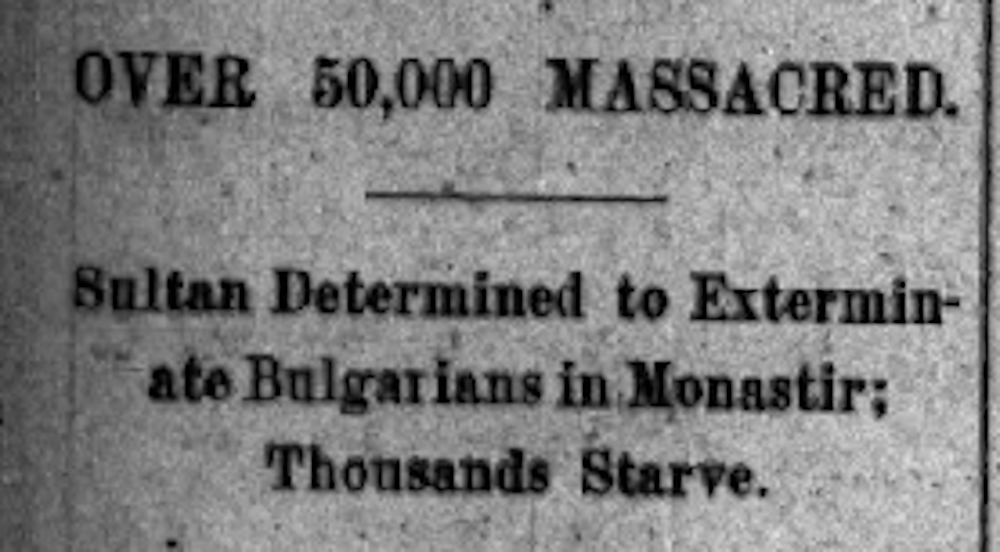
Chicago Daily Tribune – September 9, 1903. Full page.
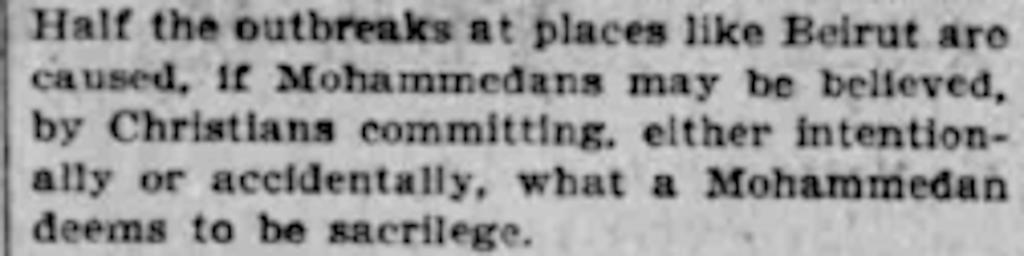
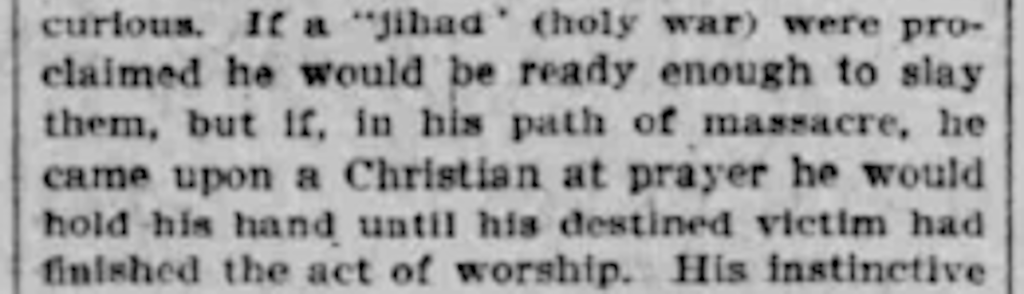
Indianapolis Journal (USA) – October 4, 1903. Full page.
The article concerned the massacre of 50,000 Christians in Macedonia by the Muslim Turks and gave the perspective of an educated Muslim from Constantinople.
More:
Fondapol breakdown of worldwide Islamic terrorist attacks 1979-2024.
Wahhābism began in the mid-1700s.
Raymond Ibrahim on the Muslim conquests of the 7th century.
The Indianapolis article shows the double-edged sword of a significant portion of the Muslim population: obey our particular sensibilities or else. That they see themselves as Judge, Jury and Executioner of other people has its roots in the belief that Islam is the last, true religion and that Jews and Christians broke their covenants with God. (This also explains why there was much Christian violence towards Jews until the mid-1900s.)
The first iteration of Islam was designed to attract Jews in Muhammed’s base of Mecca and Medina, as with a call to face Jerusalem for prayers. However, nearly all Jews (and most other people at first) did not accept Muhammed as a prophet because, for one thing, the period of prophecy had ended a thousand years earlier. Those who did not convert were murdered. And so the Koran became laced with antisemitism.
With that foundation, it should be no surprise to learn of the many massacres, pogroms, and acts of discrimination inflicted on Jews in MENA over the centuries.
JewishWebsite.com has an incomplete list and can’t record the countless acts against individuals. An Aish article has insights and details.
In Palestine
Many people stress that Arabs and Jews had good relations in the old days. What’s the whole story?
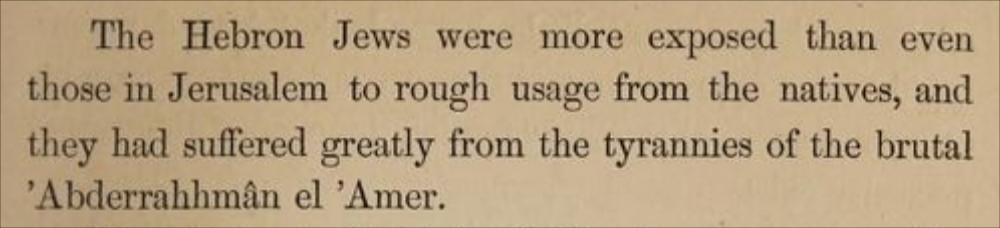
Finn, p. 129.
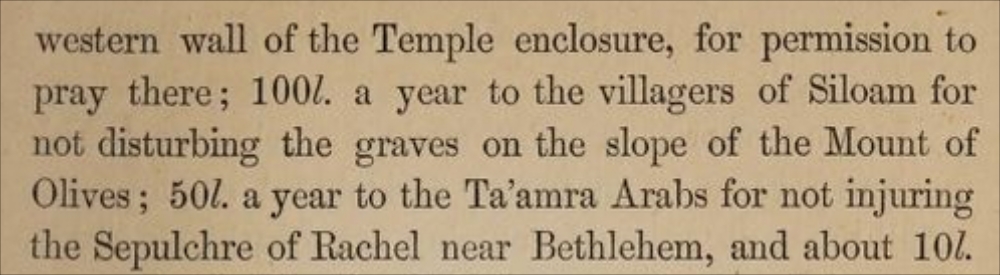
Jews were extorted in various ways. Ibid., pages 118-119.
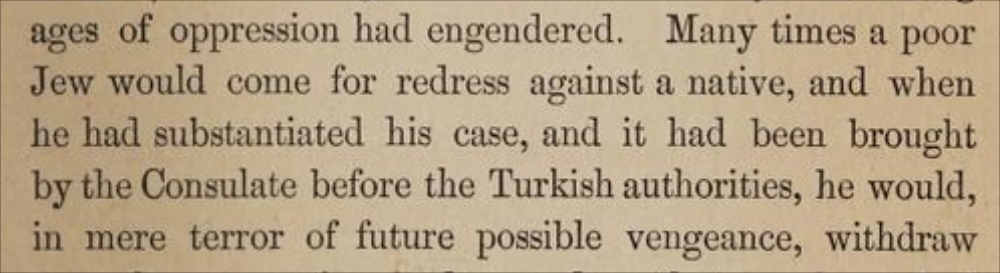
Ibid., p. 127.

Ottoman Reform in Syria and Palestine 1840-61- 1968, p. 187 on Archive.
(Needs login. As with a few Jewish writers, this is an exception as he elaborates what others like Finn wrote. Also, some of his sources are Arabic and Gentile.)

Ibid., p. 187.

Ibid., p. 186.

Tristram, p. 393.
Also see p. 177 for evolving attitudes towards Christians.

A letter from a Jew in Palestine to Sir Moses Montefiore about the time before Egypt’s conquest of Palestine and Syria. Quoted in
Agricultural land in Palestine: Letters to Sir Moses Montefiore, 1839.
By Ruth Kark in 1988. Page 215 on ResearchGate.
Egypt’s conquest of the region by Muhammed Ali was brief- 1931-1940- but brought reforms that gradually improved things for Christians and Jews.

Finn, p. 201.
They were followed in later decades by other enactments influenced by European governments. The locals did not want things to change, as these clips show. By the early 1900s, the situation had ameliorated for the old Jews- not that it became ideal- and the recent past and the double-edged nature of some Muslims were constant clouds over daily life. Arab Christians had similar tendencies towards Jews in those days.
As for the new Jews…

Turks, Arabs and Jewish Immigration… P. 7, Oxford Archive.
Page 371 (425 of file) has other instances of pre-WWI violence. The author gives a fair account of the different perspectives.
These clips refute a line from the 1920 Palin Report that wrote, "No serious attack on the Jewish population is recorded (emphasis added) since the time of Ibrahim Pasha in 1840." Another line said, "...lived together in a state of complete amity." There were a small number of old Jews in those days so amity was easy.
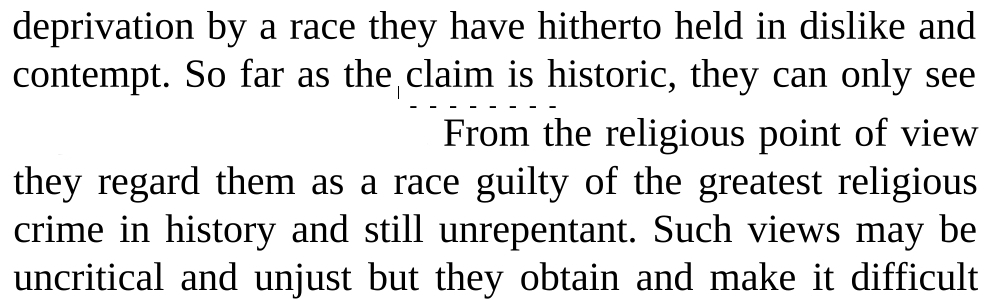
How the Muslims viewed Jews. Palin. p. 10.
(More about the Report on Chronology D.)
That was the experience for Jews and Christians. The land was also rife with a culture of-
Tribal violence and vengeance

Tristram, p. 517.
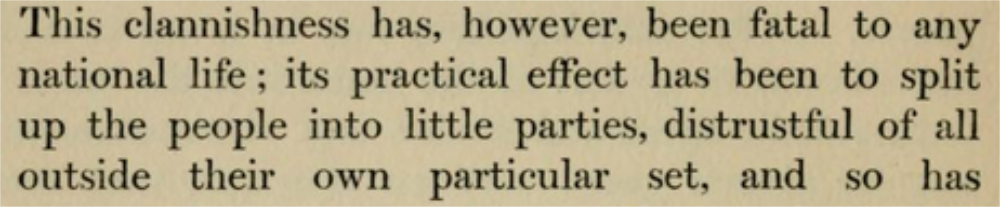
Wilson, p. 80.

Ottoman Reform, page 8. More on p. 9.
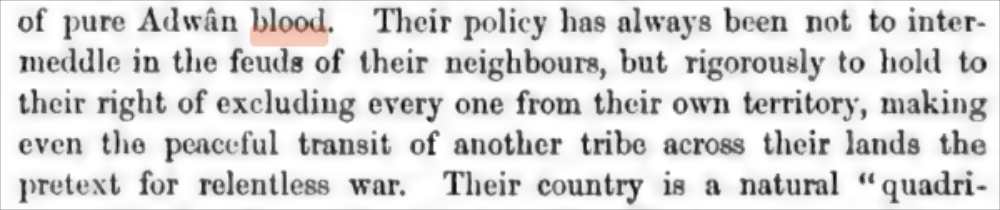
Tristram, p. 488.

Tristram, p. 488.
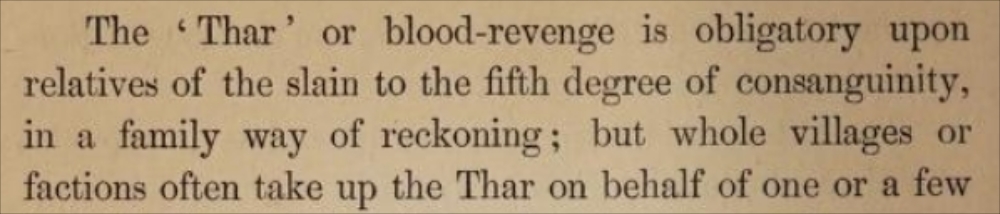
Finn (Stirring), p. 244.
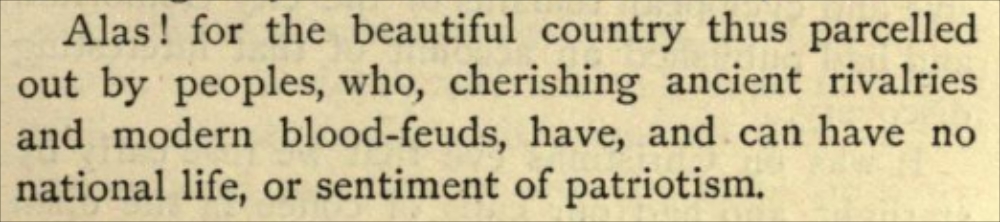
Byeways in Palestine by James Finn – 1872. Page 413 on Archive.org.
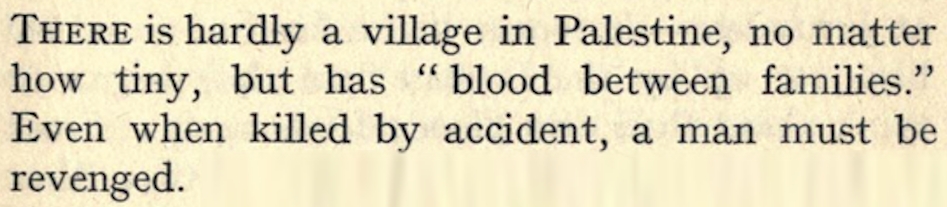
Baldensperger, p. 115.
Mr. Baldensperger made the mistake of writing that the Hebrew Bible endorses revenge. Four passages explicitly forbid it and "eye for an eye" refers to compensation.(Considering how many people have misunderstood the Torah's "eye for an eye" that has been around for close to 3,400 years, is it then hard to believe that people are also mistaken about Israel?)
The Jewish perspective of Arabs
A few individual Zionists in the early years said things that are still held up today as “proof” of Jewish malfeasance. Like Israel Zangwill: “Palestine is a country without a people, the Jews are a people without a country.” This was factual- the Arabs weren’t a nation- but unwise since it was easily misconstrued. Also, how many of those who quote him are aware that the UK’s Earl of Shaftesbury said it first in 1874? Palestine Exploration Fund, p. 116 on Archive.org.
Here is what the vast majority of Jews believed as espoused by the future Prime Minister David Ben-Gurion- and rarely quoted:
We knew that hundreds of thousands of Arabs lived in the land and were connected to its land. And out of Zionist and socialist recognition, we knew how to appreciate and respect the rights of these residents… we insisted on our duty to meet the Arab residents of the country, a meeting‑of brothers bound together by the fate of their lives and their future in this country.
“Samuel’s Account” in “We And Our Neighbours” – 1925.
The original is in Hebrew; Google translated version (9th par. from end).
…and there is no doubt that the Arab people in Palestine have the right to self-determination. … Freedom of self-determination should not be taken away from Arabs for fear that it might make our work more difficult.
The Arabs, as residents of this land, have the full right to enjoy Palestine, but they do not have the right, as owners of private property, to forbid us from enjoying the land. … But [self-determination] does not intend to make them masters of things that they did not create and that are not the fruit of their labor. They have no power to determine our right to exist, to work, to settle on the land, as long as we do so not at their expense but by the sweat of our brow.
“Foreign Policy of the Hebrew People”, ibid.
The original Hebrew; Google translation (around the middle of the page).
- To reach a wide audience, Theodr Herzl wrote a utopian novel that was based on coexistence with the Arabs: Old New Land- translated from Altneuland – 1920, Archive.org.
Next: Chronology D: World War I – 1922. Or Home for the top issues.